Our Family
Genealogy Pages


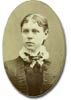
Samuel Hubbard Scudder[1, 2]
 1837 - 1911 (74 years)
-
Name Samuel Hubbard Scudder Birth 13 Apr 1837 Boston, Suffolk, Massachusetts  [3]
[3] Gender Male Death 17 May 1911 Cambridge, Middlesex, Massachusetts [4] Person ID I3269 Scudder Last Modified 14 Mar 2006
Father Charles Scudder, b. 1789, Barnstable, Barnstable, Massachusetts d. 21 Jan 1863, Boston, Suffolk, Massachusetts (Age 74 years) Mother Sarah Lathrop Coit, b. 15 Sep 1804, New London, Connecticut d. Yes, date unknown Marriage Est 1834 Family ID F1163 Group Sheet | Family Chart
Family Ethelinda Jane Blatchford, b. 12 Jan 1841, New York City, New York, New York d. 9 Jun 1872, Montreux, Switzerland (Age 31 years) Marriage 25 Jun 1867 Cambridge, Massachusetts [4] Children 1. Dr. Gardiner Hubbard Scudder, b. 3 Sep 1869, Cambridge, Middlesex, Massachusetts d. 26 Dec 1896, Cambridge, Middlesex, Massachusetts (Age 27 years)Family ID F1215 Group Sheet | Family Chart Last Modified 3 Mar 2024
-
Notes - Samuel graduated from Williams College, 1857, a naturalist, president of the Boston Society of Natural History, and editor of the journal called "Science." He took his Master of Science degree in 1892 at Harvard, where he was assistant to Louis Agassiz in the Museum of Comparative Zoology. His famous sketch "In the Laboratory with Agassiz" was published in "Every Saturday" in 1847 and reprinted many times. He may be most widely known for his essay on the importance of first-hand, careful observation in the natural sciences. The treatise on inductive reasoning, entitled "The Student, the Fish, and Agassiz", reflected his initial experience under the tutelage of Agassiz.
In 1864, he became custodian of the boston Society of Natural History. In 1875, he became General Secretary of the American Association for the Advancement of Science. In 1877, he was elected to the National Academy of Science and in 1885 became editor of "Science." In 1889, he brought out "Butterflies of the Eastern United States" in three volumes. Samuel wrote works comprising more than 300 titles and besides his American Scientific affiliations, he was honorary fellow of the Royal Society of Canada, and of the Entomological Society of London.
A student of Mark Hopkins at Williams College, Samuel was a prolific writer, publishing 791 papers between 1858-1902, on insect biogeography and paleobiogeography, insect behavior ontogeny and phylogeny, insect songs, trace fossils, evolution, insect biology and economic entomology. He also wrote on ethnology, general geology, and geography.
His masterwork of fossil terrestrial arthropod research was the two-volume set Fossil Insects of North America: The Pre-tertiary Insects (1890) (a collection of his previous papers on Paleozoic and Mesozoic insects) and The Tertiary Insects of North America (1890).
He also published comprehensive reviews of the then-known fossil cockroaches of the world (1879), Carboniferous cockroaches of the United States (1890, 1895), and fossil terrestrial arthropods of the world (1886, 1891). Scudder's Nomenclator Zoologicus (1882-1884) was a seminal and comprehensive list of all generic and family names (Zoology including insects).
- Samuel graduated from Williams College, 1857, a naturalist, president of the Boston Society of Natural History, and editor of the journal called "Science." He took his Master of Science degree in 1892 at Harvard, where he was assistant to Louis Agassiz in the Museum of Comparative Zoology. His famous sketch "In the Laboratory with Agassiz" was published in "Every Saturday" in 1847 and reprinted many times. He may be most widely known for his essay on the importance of first-hand, careful observation in the natural sciences. The treatise on inductive reasoning, entitled "The Student, the Fish, and Agassiz", reflected his initial experience under the tutelage of Agassiz.
-
Sources