Our Family
Genealogy Pages


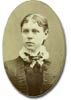
Lieutenant Frederick W. Kerner
 Est 1829 - Bef 1896 (< 66 years)
-
Name Frederick W. Kerner Prefix Lieutenant Birth Est 1829 Gender Male Death Bef 1896 Michigan 
Person ID I13025 Scudder Last Modified 17 Apr 2007
Family Theodosia Forman, b. Abt 1839, Monmouth county, New Jersey d. DECEASED Children 1. Frederick S. Kerner, b. Abt 1865, New Jersey d. Yes, date unknownFamily ID F4502 Group Sheet | Family Chart Last Modified 3 Mar 2024
-
Notes - Frederick enlisted in Company A, 14th New Jersey Infantry on July 15, 1862, as a lieutenant. He was promoted to a full lieutenant first class on October 31, 1862, effective May 12, 1863. He was received a disability discharge August 13, 1864.
Major Peter Vredenburgh believed that Frederick had stolen a personal letter from him which likely had something to do with Kerner's plans to marry Theodosia Forman. In his letters home, November 1862-January 1863, Vredenburgh referred to Kerner as “a consummate humbug,” “an infernal rascal,” and “one of those kinds of villains who will never repent.” “I hope he will not succeed and measures have been taken to apprise her of his character, so that if she has him now, she will deserve what will follow.” “I would have him dismissed from the service if it were not for Theodosia.” When Kerner fell off his horse in May 1864 and injured his shoulder, resulting in his eventual medical discharge in August, Vredenburgh commented, “Kerner has gone to the hospital—says he fell from his horse but he is such a white livered coward that I don't believe he is hurt at all.”
The 14th Regiment New Jersey Volunteer Infantry was recruited in the summer of 1862 in response to President Lincoln's call for 300,000 volunteers. Under the command of Colonel William S. Truex the regiment was mustered into federal service for three years on August 26th. It trained at Camp Vredenburgh near Freehold, New Jersey on the grounds of the Monmouth battlefield of 1778. Its companies came mostly from central New Jersey and were a good mix in origin. Four companies were from urban Trenton and Elizabeth and six from rural Monmouth, Ocean, and Middlesex counties. The men of the 14th New Jersey proudly boasted to be neither draftees nor bounty men, but freely enlisted patriots.
The regiment played a major role in saving our nation's capitol, Washington, D.C. For its steadfast defense and fighting withdrawal in the face of numerically superior Confederate forces at the Battle of Monocacy near Frederick, Maryland, the regiment became known as the "Monocacy Regiment." It, along with other regiments of the 3rd Division, VI Corps, received the salute of Major General Philip Sheridan for exemplary conduct and fighting qualities at Cedar Creek, Virginia. During the war the total combat fatalities of the 14th Regiment New Jersey Volunteers ranks fourth among New Jersey Regiments.
The 14th fought in many major engagements including the Battle of Locust Grove, The Wilderness, Spottsylvania, Cold Harbor, Monocacy, Cedar Creek, Opequon, Petersburg, and Saylor's Creek. Thirty-four months of continuous campaigning thinned the regiment's ranks from 950 to 230 men. A total of 1384 officers and men served in the 14th at various times, of whom 345 were either killed, wounded, or missing in action. Its bravery and casualties won the regiment the honor of being included in William Fox's list of "300 Fighting Regiments." During its service the 14th New Jersey covered over 1000 miles by rail, over 600 miles by ship, and over 2000 miles by foot.
- Frederick enlisted in Company A, 14th New Jersey Infantry on July 15, 1862, as a lieutenant. He was promoted to a full lieutenant first class on October 31, 1862, effective May 12, 1863. He was received a disability discharge August 13, 1864.